


DEX analytics platform with real-time trading data - https://sites.google.com/walletcryptoextension.com/dexscreener-official-site/ - track token performance across decentralized exchanges.

Privacy-focused Bitcoin wallet with coin mixing - https://sites.google.com/walletcryptoextension.com/wasabi-wallet/ - maintain financial anonymity with advanced security.

Lightweight Bitcoin client with fast sync - https://sites.google.com/walletcryptoextension.com/electrum-wallet/ - secure storage with cold wallet support.

Full Bitcoin node implementation - https://sites.google.com/walletcryptoextension.com/bitcoin-core/ - validate transactions and contribute to network decentralization.

Mobile DEX tracking application - https://sites.google.com/walletcryptoextension.com/dexscreener-official-site-app/ - monitor DeFi markets on the go.

Official DEX screener app suite - https://sites.google.com/mywalletcryptous.com/dexscreener-apps-official/ - access comprehensive analytics tools.

Multi-chain DEX aggregator platform - https://sites.google.com/mywalletcryptous.com/dexscreener-official-site/ - find optimal trading routes.

Non-custodial Solana wallet - https://sites.google.com/mywalletcryptous.com/solflare-wallet/ - manage SOL and SPL tokens with staking.

Interchain wallet for Cosmos ecosystem - https://sites.google.com/mywalletcryptous.com/keplr-wallet-extension/ - explore IBC-enabled blockchains.

Browser extension for Solana - https://sites.google.com/solflare-wallet.com/solflare-wallet-extension - connect to Solana dApps seamlessly.

Popular Solana wallet with NFT support - https://sites.google.com/phantom-solana-wallet.com/phantom-wallet - your gateway to Solana DeFi.

EVM-compatible wallet extension - https://sites.google.com/walletcryptoextension.com/rabby-wallet-extension - simplify multi-chain DeFi interactions.

All-in-one Web3 wallet from OKX - https://sites.google.com/okx-wallet-extension.com/okx-wallet/ - unified CeFi and DeFi experience.

Jeux en ligne gratuits sur Poki Play Now !

À l’ère numérique, on-line casinos se sont transformés en plateformes dynamiques offrant des opportunités de jeu passionnantes. Parmi les concurrents, BetBlast se distingue comme une sélection populaire pour les amateurs de jeux. Cet article fournit une perception informative de ce à quoi vous pouvez vous attendre si vous choisissez de jouer chez BetBlast. On Line Casino Betblast propose une sélection exaltante de slots, des rouleaux traditionnels aux vidéos slots modernes et aux progressifs à gros gains. Chassez le trésor dans Jackpot Quest, profitez du luxe avec Piggy Riches, ou faites tourner avec des chiots joueurs dans The Dog House. Pour des réponses aux questions courantes, BetBlast a proposé une section FAQ. https://betblastjouer.fr/

Bonus Betblast

Notre équipe teste, ajuste et apprécie sincèrement chaque titre car nous croyons que le jeu est la façon dont nous apprenons. En savoir plus sur la plateforme sur notre page d’entreprise. Poki.com reste gratuit pour tous en affichant des publicités pendant votre visite. Ces publicités aident à maintenir la plateforme en fonctionnement et soutiennent les développeurs qui créent vos jeux préférés, afin que vous puissiez continuer à jouer sans payer. On Line Casino BetBlast ne dispose pas d’une application mobile, mais vous pouvez toujours profiter d’une expérience de jeu de haute qualité. Dans le but de promouvoir le jeu responsable, BetBlast a fourni des conseils utiles sur la façon de rester en sécurité lors de vos jeux au casino.

Rejoignez Betblast – Le Meilleur On-line Casino !

Une fois que vous avez rempli le formulaire, vous devrez vérifier votre e-mail. Vérifiez simplement votre boîte de réception pour l’e-mail de confirmation et cliquez sur le lien de vérification pour activer votre compte. Ensuite, vous pouvez vous connecter, faire votre premier dépôt et réclamer votre bonus de bienvenue. Commencez par visiter le site officiel et cliquez sur le bouton “S’inscrire”. Vous serez invité à remplir quelques informations de base, y compris votre nom complet, adresse e-mail, numéro de téléphone, date de naissance et devise préférée. Il est également essentiel de définir un mot de passe fort pour sécuriser votre compte. Tous les jeux présentés sur la plateforme sont testés et approuvés par des laboratoires indépendants pour garantir l’équité et la précision.

  • Le programme de fidélité Betblast offre des bonus et des privilèges pour les joueurs avancés qui préfèrent faire tourner les rouleaux de slots plus souvent ou jouer à d’autres jeux de casino.
  • Slot Games bonus casino Betblast pour l’inscription nécessite un dépôt minimum de £20.
  • Ma seule plainte est que j’aimerais qu’ils aient une application mobile dédiée, mais le site fonctionne parfaitement sur mon téléphone.
  • Ils sont conçus pour aider les joueurs à accéder à leurs comptes et profiter des jeux lorsque le site principal est indisponible en raison de restrictions régionales, de problèmes de serveur ou d’autres limitations d’accès.

Wie Man Dem Betblast On line Casino Beitritt Und Sich Registriert

De plus, les promotions BetBlast sont souvent mises à jour, offrant aux joueurs des opportunités d’améliorer leur expérience de jeu. Vos données personnelles sont protégées avec une sécurité SSL avancée qui garantit le cryptage, assurant la confidentialité à tout moment. Avec des jeux de développeurs de premier plan comme NetEnt et Evolution, BetBlast offre une expérience de jeu fiable et de premier ordre. Online.on line casino, ou O.C, est un guide mondial du gambling, proposant les dernières actualités, guides de jeux et critiques honnêtes de casinos en ligne réalisés par de véritables experts.

Notre Avis Last Sur Betblast Casino

Chaque mois, plus de 100 millions de joueurs rejoignent Poki pour jouer, partager et découvrir les meilleurs jeux en ligne. Embrassez l’excitation des meilleurs bonus de casino et laissez-les améliorer votre aventure de jeu. Des bonus en argent aux tours gratuits, ces offres offrent une valeur supplémentaire et vous donnent plus de chances de décrocher ces jackpots. Si vous aimez betblast casino login des jeux de casino de haute qualité avec des promotions avantageuses, Betblast vaut la peine d’être considéré.

Le Support Client Est-Il Disponible ?

Le défi réside dans l’intégration efficace des blocs pour éviter de manquer d’espace. Avec une mécanique simple, des visuels vibrants et des niveaux de plus en plus difficiles, Block Blast offre une expérience de jeu apaisante mais captivante pour les joueurs de tous âges. J’adore la variété de jeux sur Betblast, en particulier la section casino en direct. Le bonus de bienvenue était génial, et j’ai également profité de quelques bonus de recharge. Ma seule critique est que j’aimerais qu’ils aient une application mobile dédiée, mais le site fonctionne bien sur mon téléphone. Le casino en ligne vous fera aimer jouer dès la première minute, car vous vous retrouverez dans un environnement sécurisé avec une navigation intuitive. Le site, doté d’une licence costaricaine, surveille attentivement la sécurité des données des joueurs via la surveillance et le cryptage. Il collabore avec des fournisseurs de logiciels fiables, éliminant ainsi le risque de tromperie des clients au Royaume-Uni.

Betblast Casino App

Le casino recommande également de fixer une limite de dépôt, une limite de perte et une limite de temps. Ils recommandent aussi de faire des pauses ainsi que d’essayer l’auto-exclusion sur demande. Notre plateforme fournit les outils, le support et la visibilité nécessaires pour développer votre audience et tirer profit de votre travail. Poki abrite une collection sélectionnée des meilleurs jeux pour votre navigateur. Chaque titre est soigneusement choisi pour garantir qu’il soit amusant, créatif et agréable à jouer sur mobile, tablette ou ordinateur. Les développeurs de jeux publient de nouveaux jeux sur notre plateforme quotidiennement, il y a donc toujours quelque chose de nouveau à découvrir.

Le multi-comptage et la chasse aux bonus sont punis par le blocage du compte. Les miroirs sont d’autres liens de sites qui reproduisent le casino principal. Ils sont utiles si le site principal est indisponible en raison de restrictions régionales, de problèmes de serveur ou de blocages ISP, permettant un accès ininterrompu.


Why Volume, DEX Analytics, and Yield Farming Decide Who Wins in DeFi

Okay, so check this out—volume isn’t just a number on a chart. It’s the pulse. When you’re watching a token trade on a decentralized exchange, the price tells you what happened; volume tells you who showed up. Short-term spikes can look exciting, but sustained volume is what separates a rumor from real adoption. My gut says most traders underweight this; they chase candle patterns and social hype while ignoring the deeper liquidity signals.

At first glance, volume seems simple: more trades equals more interest. But the reality is messier. On one hand, a big volume bar can mean organic buying. On the other, it might be a coordinated liquidity dump or a bot-funded wash trade. Initially I thought volume was a straightforward proxy for demand, but then I started cross-referencing on-chain flow and DEX depth—and that changed my read significantly. So you have to ask: who’s trading, where are the tokens coming from, and what’s the orderbook depth behind that spike?

A trader analyzing DEX charts and on-chain metrics on a laptop

Reading DEX Analytics Like a Detective

Dex analytics give you tools to answer those questions. Seriously, they’re like magnifying glasses. Look at spread, slippage, and available liquidity at multiple price levels. If you see high 24-hour volume but poor depth beyond the top of book, a modest sell could crater the price. On the other hand, genuine resilience shows up as shallow slippage even during big taker orders. Here’s the trick: combine volume with liquidity metrics and wallet concentration to figure out whether a move is durable.

One practical pattern I use: compare swap volume to changes in liquidity pools. If swap volume is high but total value locked (TVL) in the pool barely moves, someone’s arbitraging or reallocating between pools. If both swap volume and LP balances are rising, that’s healthier—people are adding liquidity at market prices, not just chasing pumps. Hmm… that subtle divergence is where alpha hides.

And yes, tools matter. I rely on real-time DEX scanners that flag abnormal volume-to-liquidity ratios, track newly added liquidity, and highlight unusual token flows between wallets. For less noise and more signal, filter out small, repeated micro-swaps caused by bots. Those inflate volume numbers but rarely indicate real interest.

Volume Patterns That Actually Predict Moves

Not all volume is created equal. Here’s a mental checklist I use when evaluating a token:

  • Consistency: Is volume steady over several sessions or spiking and vanishing?
  • Depth correlation: Does on-chain liquidity match the nominal volume?
  • Wallet concentration: Are a few wallets responsible for most trades?
  • Cross-DEX behavior: Is the same token showing congruent volume across multiple venues?

If the answers tilt toward consistency, broad participation, and matched depth, you’re more likely looking at a sustainable trend. If the answers are the opposite, well—prepare for volatility and possible rug events. I’m biased toward conservative position sizing when signals are noisy; that part bugs me because bigger swings can be tempting.

Yield Farming: Where Volume and Liquidity Meet Opportunity

Yield farming still rewards careful execution. The best opportunities crop up where token incentives align with real trading activity. Farms that reward liquidity providers for pools with genuine swap flow reduce impermanent loss risk, because fees earned from volume can offset price divergence. On the flip side, farms that advertise sky-high APRs on low-volume pools are often subsidized by token emissions—short-lived and risky.

Here’s a simple framework for evaluating a yield farm:

  1. Assess the pool’s average daily volume vs. its TVL. Higher volume per TVL means fee income can be meaningful.
  2. Check sourcing: is the boost coming from protocol rewards or organic fees? Protocol rewards can evaporate.
  3. Watch for whale LPs. If a handful of addresses supply most liquidity, your exit could be painful.

One thing I learned the hard way: chasing the highest APR usually backfires. Take into account runway for incentives and the tokenomics of rewards. If emissions dwarf real fee generation, you’re babysitting a subsidy bubble. Something felt off the first few times I ignored that—so I stopped doing it, mostly.

Signal Combinations That Work

Combine these signals and you’ll start to separate noise from opportunity. Volume spikes accompanied by new wallet growth, rising LP deposits, and cross-DEX consistency? That’s attractive. Volume spikes with declining LP and concentrated wallets? Exercise caution. Actually, wait—let me rephrase that: don’t just react to one metric. Think of them as a small jury. On one hand, a single vote (big volume) can look persuasive; though actually, the jury needs more than that to convict a trade idea.

Pro tip: set alerts for volume-to-liquidity ratio thresholds, then validate with wallet flow tools. When alerts trigger, a quick look at top traders’ behavior—are they adding, withdrawing, or routing between pools—answers a lot fast. Wow, speed matters. Fast decisions backed by structured checks beat gut-only trades.

Where to Monitor Everything — and One Tool I Use

There are a handful of aggregator dashboards and DEX trackers I use regularly to triangulate volume and liquidity. For live token scans, I often lean on dexscreener apps because they provide quick visual cues on volume trends, liquidity changes, and cross-pair behavior, all in one place. The single-link integration makes it easy to jump from a suspicious spike to on-chain wallet flows without losing momentum.

That said, always pair such a tool with blockchain explorers and analytics that reveal LP composition and token vesting schedules. No tool is perfect, and each has blind spots—so redundancy is your friend.

FAQ

Q: How much volume is “enough”?

A: There’s no universal threshold. Scale your expectations to TVL and the token’s market. For a small-cap pool, a few thousand dollars of daily volume might be meaningful; for larger pools, you want consistent six-figure days. Context is everything.

Q: Can high volume happen without price moves?

A: Yes. Arbitrage and rebalancing can generate sizable volume with muted price change. In those cases, look for split-second order flow and cross-DEX discrepancies—those are classic arbitrage signatures.

Q: Is yield farming dead?

A: Nope. It’s evolved. The old days of blindly farming the highest APR are gone. Today’s opportunities are about fee-bearing pools with sustainable incentives and real user activity. Be selective and prioritize capital efficiency.

Why Wasabi and CoinJoin Still Matter for Bitcoin Privacy

I care about Bitcoin privacy more than most people I meet. Whoa, this matters. Seriously, privacy has practical reasons and everyday consequences for you. Initially I thought privacy tools were mostly for technologists and journalists, but then I started using coin mixing myself and my perspective shifted. This piece is about how Wasabi fits into that story.

Hmm, interesting point. Coin mixing sounds exotic. But at its heart, CoinJoin is a coordinated on‑chain transaction that breaks obvious linking heuristics. On one hand it reduces simple address clustering; on the other hand it does not magically make you anonymous. I’m biased, but I think that’s a useful distinction.

Here’s the thing. Wasabi is a desktop wallet built around CoinJoin and privacy‑preserving defaults. The wallet’s design minimizes trust by coordinating mixes via trustless protocols and broadcasting transactions in ways that reduce metadata leaks. If you want, check it out at wasabi. That link points to the project page where you can read more about the software and its philosophy.

Okay, so check this out—CoinJoin doesn’t erase history. It reshuffles recognizable patterns and raises the cost of analysis for chain‑spying companies and adversaries. My instinct said mixing would be a one‑and‑done privacy fix. Actually, wait—let me rephrase that: mixing helps, but it’s only one tool in a bigger toolbox. On balance, it’s powerful when combined with good habits.

A simplified illustration of a CoinJoin transaction with multiple inputs and outputs, emphasizing privacy gains.

What CoinJoin Actually Does (and Doesn’t)

CoinJoin makes transactions less linkable by combining multiple users’ inputs into a single transaction with many similar outputs. This reduces obvious one‑to‑one tracing heuristics. It does not, though, hide the fact that you participated in a CoinJoin event. Also, it doesn’t prevent off‑chain deanonymization if you reuse addresses, post identifying info, or mix tainted funds with accounts that have KYC records. On the flip side, it forces chain analysts to rely on weaker signals and probabilistic models, which is often enough for everyday privacy needs.

Whoa, simple but true. My first impressions were naive. Then I dug into how change outputs and denomination choices matter, and somethin’ clicked. CoinJoin is about building ambiguity, not about creating a perfect cloak. That ambiguity is valuable, and it’s what Wasabi aims to provide without pretending to be a magic bullet.

Practical, High‑Level Privacy Habits

Keep coins you want private separate from coins you use publicly. Use coin control and avoid address reuse. When possible, withdraw funds from custodial services into private wallets before mixing, though be aware that deposits and withdrawals can leave KYC trails. Don’t mix funds you don’t have a lawful right to control—mixing illegal proceeds is both unethical and risky. If you have any doubt about legality, get legal advice.

On the more tactical side, update your software. Keep tor enabled and confirm your Wasabi client is genuine and up to date. I’m not giving a step‑by‑step here—this is about safe practices not a how‑to for evading rules. Also, use privacy as a lifestyle choice; one mix won’t cover a lifetime of sloppy habits. Little things add up: metadata from exchanges, linking through reused accounts, and even public social posts can undo months of careful effort.

Hmm… that part bugs me. People assume tech alone protects them. It doesn’t. On one hand, Wasabi and CoinJoin materially increase the difficulty of chain analysis; though actually, if you later move mixed coins through a KYC service, you can reintroduce linkability. So plan your flows intentionally and accept tradeoffs.

Risks, Limits, and Legal Considerations

Be realistic about what CoinJoin accomplishes. Large surveillance firms have more data and compute power than most users imagine, and governments can subpoena exchanges and service providers. Using privacy tools for harm can attract legal penalties. I get that privacy is a right, and I’m sympathetic to people who need it for safety, journalism, or resisting overreach, but it’s not a shield for illegal behavior.

Here’s a practical note: mixing may flag your coins in some services’ internal scoring systems even if they can’t definitively link you to a prior owner. That can complicate withdrawals or on‑ramps. So expect friction in certain regulated environments, and plan accordingly. (Oh, and by the way…) Keep records if you need to prove provenance for legitimate funds.

Initially I thought the question was purely technical. Later I realized it’s also social and legal. Privacy tools interact with policy, markets, and human error, and those interactions matter just as much as cryptography does.

How To Think About Wasabi as a Tool

Think of Wasabi like a privacy service that minimizes assumptions and surfaces. It’s open source, community driven, and built with a threat model in mind. Use it when you need to reduce obvious chain linkability and when you understand the tradeoffs involved. If you want stronger operational security, combine it with good compartmentalization, threat modeling, and—yes—healthy humility about the limits of software.

I’m not 100% sure about ideal mixing cadence for every user, and honestly, there isn’t one-size-fits-all. Your needs differ if you’re a journalist under threat versus a person who just values financial discretion. Tailor your approach, and don’t be afraid to ask experienced peers for advice. Privacy communities are helpful, though be skeptical and verify claims.

FAQ

Is CoinJoin the same as a mixer?

They are related concepts. CoinJoin is a specific protocol pattern that mixes coins by combining transactions; “mixer” is a broader term that includes custodial and non‑custodial services. CoinJoin implementations like Wasabi aim to avoid custodial risk by coordinating participants rather than taking custody of funds.

Will using Wasabi prevent all tracing?

No. It increases ambiguity and raises the cost of analysis, but it does not guarantee anonymity. Mixing is most effective when combined with good operational security and an understanding of on‑chain and off‑chain risks.

Is CoinJoin legal?

Generally, using privacy tools is legal in many jurisdictions, but laws vary and context matters. Don’t use mixing to hide criminal proceeds. If you’re unsure about your situation, consult a lawyer who understands cryptocurrency law.

Why Yield Farming Feels Like a Side Hustle — and How OKX Integration Changes the Game

Whoa! I started thinking about yield farming two cups of coffee ago and ended up knee-deep in charts. My first impression was: it’s messy. Really messy. But then I dug in. Initially I thought yield farming was just chasing high APYs. Actually, wait—let me rephrase that: at first it felt like chasing shiny numbers, which is true for a lot of newcomers, but there’s more nuance once you look at custody, UX, and CEX connectivity.

Here’s the thing. For traders used to centralized exchanges, yield farming and staking on-chain introduces friction that often gets ignored. My instinct said that people want yield without babysitting smart contracts all the time. Something felt off about a lot of UX choices in DeFi. On one hand, you get decentralized control; on the other, you get complexity and fragmented liquidity. The tradeoff isn’t binary though—there are hybrid approaches that make sense.

Let me be honest—I’m biased toward practical setups. I like tools that reduce mental load. This part bugs me: many protocols advertise massive APRs but hide impermanent loss, token emissions, and unstaking delays behind flashy dashboards. Hmm… and then yields evaporate. A lot of yield that looks amazing on paper is time-limited, reward-token-heavy, or simply unsustainable.

So how do you actually capture real staking rewards and yield without turning into a 24/7 protocol babysitter? The short answer is: consolidation. Consolidation plus smart risk controls. Long sentence coming: consolidating assets into a custody solution that integrates with a credible centralized exchange allows traders to tap into CEX-grade liquidity and often more predictable staking yields, while retaining on-chain options when needed, and that hybrid model is what I’m seeing more pros adopt, quietly shifting capital away from high-maintenance farms toward predictable, lower-friction returns.

Traders analyzing yield farming strategies on multiple screens

Why CEX Integration Matters — and when it doesn’t

OK, so check this out—CEX integration lets you stake without the custody headaches. Using a wallet that talks directly to a centralized exchange reduces transfer times and slippage, simplifies KYC churn for frequent redeployments, and can offer straight-through staking rewards. For traders looking for a smoother bridge between self-custody and exchange staking the okx wallet is one practical example of that hybrid path. I’m not shilling, I’m describing what I’ve used and seen.

On the flip side, not all integrations are equal. Some CEX-linked staking products lock assets in ways that limit your ability to pivot quickly when the market turns. And sometimes the ‘yield’ is just the exchange offering a promotional APY funded by their treasury, which fades after the campaign ends. So yes—it’s tempting, but check the fine print, because the mechanics behind rewards matter more than the headline APY.

Short note: custody risk differs. A self-custody wallet gives you private keys. CEX staking often means the exchange controls withdrawal rights. That can be fine for traders who prioritize convenience, though it is a security trade. I’m biased toward custody when capital is significant, and more pragmatic when allocations are smaller.

Here’s another angle—liquidity. When you’re yield farming on-chain, liquidity depth dictates execution price. On-chain DEX pools can be shallow and vulnerable to price impacts. A centralized venue commonly provides deeper liquidity, thus lower slippage on staking or exiting positions. That deeper liquidity can be the difference between a profitable roll and a trapped position during a flash event, especially for larger traders.

(oh, and by the way…) tax friction matters. Reward tokens complicate reporting. Staking through a CEX often centralizes reporting and can simplify tax calculations. Not legal advice. Not 100% complete either—just practical experience that helped me sleep better during tax season.

Now let’s get into strategies that actually work. Short sentence: diversify exposures. Medium sentence: split capital across fixed staking, liquid staking, and a smaller allocation to high-risk yield farms. Longer sentence: fixed staking provides predictable returns and is great for core holdings, liquid staking lets you retain protocol exposure and enables secondary yield stacking strategies, while small, tactical positions in high-yield pools offer alpha but require active monitoring and quick exit plans if incentives decay.

One trick I use is laddered lockups. Laddering reduces timing risk and preserves some liquidity cadence. It’s simple and it works. Also, I track reward token emissions and TVL trends. Watching token issuance lets you see when an APY is likely to decline. My gut said this was key before I started quantifying it, and the metrics confirmed the suspicion. Initially I thought token emissions wouldn’t matter much long-term, but they do—dilution bites hard.

Risk controls you can actually implement: set maximum allocation per farm, prefer farms with multi-year roadmaps and clear tokenomics, beware of anonymous dev teams, and use time-weighted rewards as a sanity check. Also, consider exit slippage under stress. Really think through worst-case scenarios because yields vanish faster than liquidity sometimes.

Staking rewards deserve a separate note. They’re less flashy but steadier. Validators offering staking often have slashing risks, commission structures, and downtime penalties. Don’t assume staking is “set-and-forget.” You should at least monitor validator performance and choose reputable validators—especially if delegating at scale. I once delegated to a new validator that had uptime issues for a week. Lost a little yield and a lot of patience. Lesson learned.

Now for a practical flow: choose your base assets, split them, move a portion into a custodial staking product if you need predictability, keep some in liquid staking derivatives for flexibility, and allocate a small punting bucket to capture emergent yield opportunities. Rebalance monthly. This approach is boring but effective. It also reduces the psychological load—less screen time, fewer panic sells at 3am.

How about tools? Use portfolio trackers that show APY over time. Use block explorers to audit contracts before depositing. And if you’re bridging assets between L1s and CEXs, prefer wallets and integrations that minimize chain hops and reduce transfer fees. Small optimizations add up over multiple rotations.

One more practical note: when a wallet integrates with a CEX, it can enable direct staking delegation without needing to move funds on-chain every time, saving gas and execution risk. That UX gain matters a lot for small and medium traders. I’m not saying custodial is always better—far from it—but convenience has quantifiable value.

Oh—trader psychology. Yield hunting often triggers FOMO. Seeing a 200% APR ad makes you reflexively chase. That’s the fast system talking: “Whoa! This is huge!” The slow system should step in: evaluate sustainability, check incentives, and verify that the pool has balanced LP tokens or adequate depth. On one hand the upside is tempting; though actually, most durable returns are delivered by regulated or semi-regulated venues with transparent economics.

I’m not 100% sure about everything here. Some protocols will evolve, and regulations will shift staking economics. But the practical framework stands: prioritize liquidity, understand tokenomics, use hybrid custody models where appropriate, and keep a small experimental bucket for asymmetric bets. You’ll sleep better and keep more capital intact.

FAQ: Quick, honest answers

Is yield farming dead?

No. It’s changed. High-risk farms still exist, but alpha is harder to capture and often short-lived. Sustainable yields are now a mix of staking, liquid staking, and curated pools. Traders who adapts do fine.

Should I use a CEX for staking?

Depends. If you value convenience and clearer reporting, yes. If you prioritize self-custody and full control, then no. For many traders a hybrid approach makes sense—part on CEX, part in self-custody.

What’s one practical change I can make today?

Split your staking allocations into three buckets: long-term fixed, liquid staking, and a small active yield bucket. Rebalance monthly. It reduces risk and keeps upside exposure.

Why Perpetuals Still Eat Traders Alive — And How to Trade Them Better

Whoa! Perpetual futures are addicting. They’re fast, liquid, and they let you amplify a tiny edge into something meaningful. Seriously? Yes. But here’s the thing. Most traders treat leverage like a power tool in a kitchen drawer — they don’t respect it until they cut themselves. My instinct always said that leverage markets reward discipline more than insight. Initially I thought bigger position = bigger profit, but then realized position sizing and funding mechanics matter far more than the direction you pick.

Okay, so check this out—perpetuals are not just dumb margin trades. They’re a continuous auction between longs and shorts. Short-term moves get magnified. Funding rates act like the steering wheel; they nudge exposure toward equilibrium, and sometimes they swing wildly. Hmm… that swing is where most folks get surprised. I’ll be honest: that part bugs me. Many platforms bury funding calculations behind unclear UI and somethin’ that looks like math but isn’t explained.

So if you trade perps, you need a mental model that matches reality. On one hand, leverage amplifies gains; on the other, funding and liquidation mechanics amplify losses in ways traders often underestimate. On the surface the formulae are neat—on the inside, they’re sticky. I’m not 100% sure every trader will internalize this immediately, though repeated losses tend to teach the lesson fast.

Chart of funding spikes and margin liquidation zones

How Perpetuals Really Move — A Practical Mental Model

First: funding rate = crowd thermometer. Short-term positive means longs are paying shorts. Short-term negative means shorts pay longs. Medium sentence to clarify: funding is the incentive that balances open interest. Longer thought: when funding consistently points one way over days, it signals a crowded trade that can snap back quickly, especially when leverage is high and liquidity thins at key levels, which is when liquidations cluster and price gaps widen.

On one hand, high positive funding can make long positions expensive to carry. Though actually, wait—if you believe in a move and funding is positive, staying long can still be correct if you size properly. My working rule: cap realized carry cost to something you can tolerate. If funding would eat 1% of NAV overnight, that’s a red flag for me. If it’s 0.01% — fine. These numbers aren’t law, just heuristics that stopped me from blowing up an account once.

There’s also leverage illusion. Short sentence: leverage magnifies noise. Medium sentence: that means intraday whipsaws become bigger, and stop orders slip. Longer thought: if you treat leverage as a multiplier only for profit and forget it multiplies slippage, fees, funding, and emotional strain, you’ll be very very surprised when a “small” drawdown becomes catastrophic.

Position Sizing, Risk Rules, and the Real Cost of Leverage

People obsess over entry and exit. But here’s what bugs me about that — sizing and timing of exits are more important. Short. Medium: A 5x position held through a two-day drawdown will look nothing like a 1x position; your conviction won’t matter when margin requirements bite. Long: design your position size so that a 10-20% adverse move doesn’t force you into liquidation, and then treat the remaining edge as optional exposure you can add back to if the trade proves itself.

I’ll be honest — I use a rule-of-thumb rather than a fancy optimizer. First, define max loss per trade as a percent of equity if liquidated. Second, compute margin cushion based on worst-case funding and volatility. Third, reduce size when funding is skewed against you. Something simple, but it beats memorizing PnL charts and then forgetting why the position was opened.

And look — stop losses are tricky on perps. They’re functional, not perfect. Use them for discipline, not for exact entries. Expect slippage. Expect that during fast moves you’ll sometimes get priced out at worse fills. Plan for that. That’s the reality. Traders who assume stops are an ironclad protection are asking for trouble.

Platform Choice Matters — Liquidity, UI, and Hidden Mechanics

Not all DEXs are equal. Short sentence. Medium sentence: execution, funding cadence, and liquidation engine vary by platform. Longer sentence: those differences can turn the same strategy from profitable to ruinous if you don’t account for how a specific exchange handles partial fills, automated deleverage, or insurance funds under stress.

Okay, so check this out—I’ve been testing a couple of new venues and one feature stood out: flexible margin and clearer funding transparency actually changed my behavior as a trader. When funding is visible and predictable, you can plan carry costs into your sizing model. When it’s opaque, you end up guessing and often reducing edge to zero. If you’re evaluating alternative DEXs, try the demo or testnet with small amounts first.

For those looking to explore a platform with tight UX and clear funding details, I recommend checking out hyperliquid dex as part of due diligence. I’m biased, but their interface makes it easier to see exposure and funding interactions without hunting through disparate screens, which to me is a big deal when you’re trading fast.

Also: fees and rebates. Short. Medium: they affect break-even on short-horizon trades. Longer: when you multiply fees by trade frequency and add funding differentials, a scalping edge evaporates unless platform economics support your approach.

Funding Rate Strategies — When to Ride and When to Fade

Funding spikes are a rich source of trade ideas. Short spike in favor of longs? Consider fading into a contrarian short with tight sizing. Medium: persistent skew suggests market structure change, not just a blip. Longer: you can design strategies that earn positive carry by taking the other side of overpriced exposure, but those strategies require capital to survive adverse moves and governance of drawdown tolerance.

Initially I thought chasing funding arbitrage was low-risk; then I watched a funding flip wipe out a week’s carry in hours. On one hand, funding arbitrage is attractive because it’s theoretically independent of directional risk. On the other hand, funding itself can be volatile and correlated with price moves, so keep margin cushions ample and avoid leverage traps.

Pro tip: combine funding analysis with liquidity depth at your target levels. If funding says longs are crowded but depth is deep, the moment may be less risky. If funding is skewed and order book depth is shallow, that’s the exact scenario where you can get run over.

Psychology and Execution — The Invisible Costs

Trading high leverage is as much a psychological sport as a quantitative one. Short. Medium: losses feel bigger, and wins feel sweeter, and that skews behavior. Longer: most failed strategies are not invalid models — they’re victims of human inconsistency, revenge trading, or failure to enforce rules during drawdowns.

I’ll admit I’ve been guilty of revenge trading. It’s dumb. It’s human. If you find yourself chasing, pause. Take small position sizes until clarity returns. Somethin’ about sticking to the plan calms the nervous system, which in turn improves decision making—this is not woo, it’s practical.

System 2 check: step back and review your PnL by trade type monthly. Spot patterns. If you’re losing on big draws despite positive edge, shrink trades. If you’re losing small but winning big, consider smoothing entries. Honestly, data beats feelings most of the time.

Quick FAQ — Real Questions Traders Ask

How much leverage is “safe”?

There’s no universal number. Short answer: lower than you think. Medium answer: institutional style uses 2x–5x for most strategies; retail often chases 10x–100x and pays for it. Longer thought: define safety by your ability to survive a volatility event, not by benchmark leverage. If a 20% move against you forces liquidation, that’s too aggressive for most.

Are perpetuals better on DEXs or CEXs?

Both have tradeoffs. DEXs offer composability and censorship-resistance. CEXs generally have deeper liquidity and sometimes faster match engines. Medium: if you care about custody and composability, DEXs win. Longer: trade execution quality, slippage, and funding transparency should be your priority; custody philosophy is secondary to whether your strategy survives real-world stress.

What’s the single best habit to avoid blowing up?

Risk caps. Short. Medium: enforce per-trade and total-account loss limits that automatically reduce or stop trading when hit. Longer: combine that with routine reviews and an honest record of mistakes — accountability matters. If you can’t be objective about losses, you’ll repeat them.

To wrap (and not wrap), trading perps is a blend of math, mechanics, and human behavior. Initially I thought mastering edge was about models. But actually, the real edge is managing the things models miss: funding mismatches, platform quirks, and your own impulse to double-down. On one hand, leverage offers huge optionality. On the other, it exposes you to cascading losses that are technical, psychological, and sometimes random. My final ask: treat leverage like borrowed chainsaw time — useful if you respect it, lethal if you don’t. Hmm… that’s a good mental image, right? Keep testing, keep small experiments, and keep a healthy respect for the system. You’ll thank yourself later, or at least your future account will.

Test Post for WordPress

This is a sample post created to test the basic formatting features of the WordPress CMS.

Subheading Level 2

You can use bold text, italic text, and combine both styles.

  1. Step one
  2. Step two
  3. Step three

This content is only for demonstration purposes. Feel free to edit or delete it.

Test Post for WordPress

This is a sample post created to test the basic formatting features of the WordPress CMS.

Subheading Level 2

You can use bold text, italic text, and combine both styles.

  1. Step one
  2. Step two
  3. Step three

This content is only for demonstration purposes. Feel free to edit or delete it.

What Is Difference Between ELCB And RCCB…?

What is difference between ELCB and RCCB…?

  • ELCB is the old name and often refers to voltage operated devices that are no longer available and it is advised you replace them if you find one.
  • RCCB or RCD is the new name that specifies current operated (hence the new name to distinguish from voltage operated).
  • The new RCCB is best because it will detect any earth fault. The voltage type only detects earth faults that flow back through the main earth wire so this is why they stopped being used.
  • The easy way to tell an old voltage operated trip is to look for the main earth wire connected through it.
  • RCCB will only have the line and neutral connections.
  • ELCB is working based on Earth leakage current. But RCCB is not having sensing or connectivity of Earth, because fundamentally Phase current is equal to the neutral current in single phase. That’s why RCCB can trip when the both currents are deferent and it withstand up to both the currents are same. Both the neutral and phase currents are different that means current is flowing through the Earth.
  • Finally both are working for same, but the thing is connectivity is difference.
  • RCD does not necessarily require an earth connection itself (it monitors only the live and neutral).In addition it detects current flows to earth even in equipment without an earth of its own.
  • This means that an RCD will continue to give shock protection in equipment that has a faulty earth. It is these properties that have made the RCD more popular than its rivals. For example, earth-leakage circuit breakers (ELCBs) were widely used about ten years ago. These devices measured the voltage on the earth conductor; if this voltage was not zero this indicated a current leakage to earth. The problem is that ELCBs need a sound earth connection, as does the equipment it protects. As a result, the use of ELCBs is no longer recommended.

What Is RCCB?

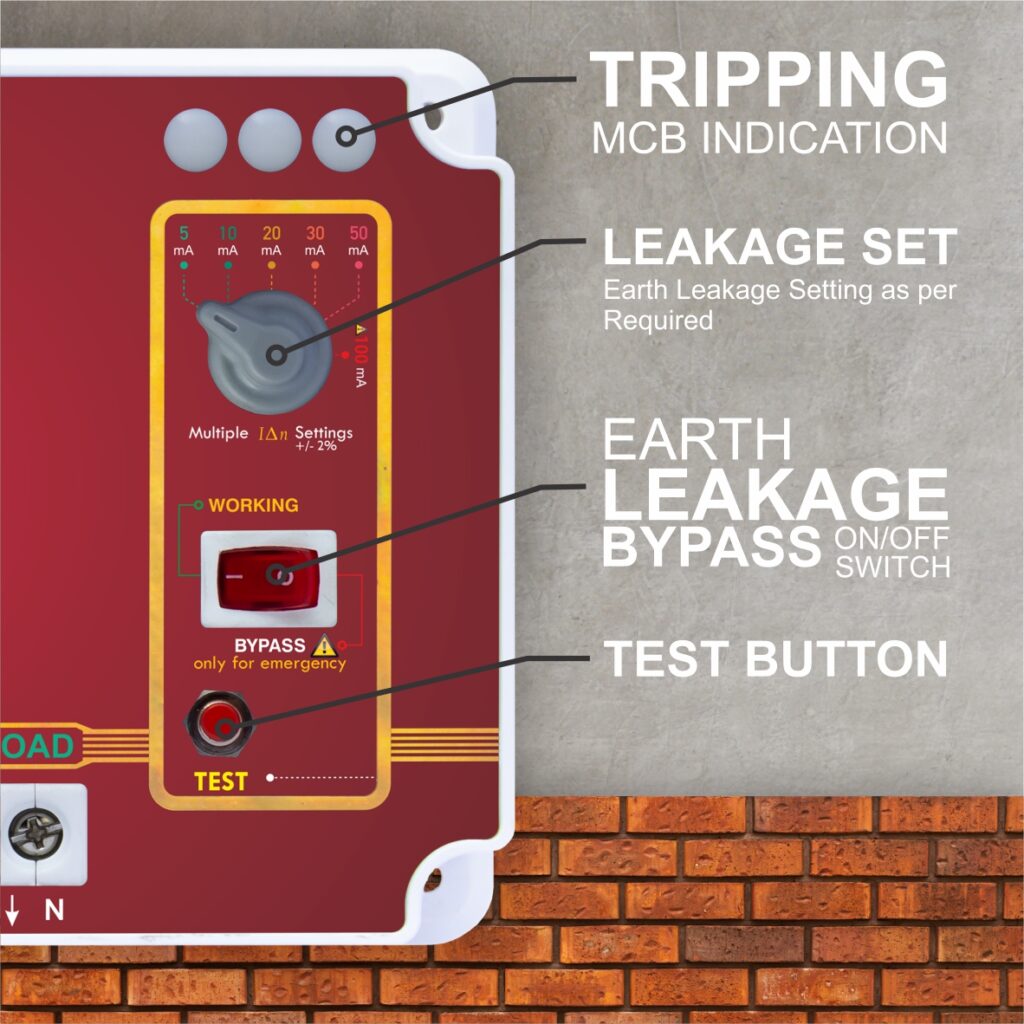
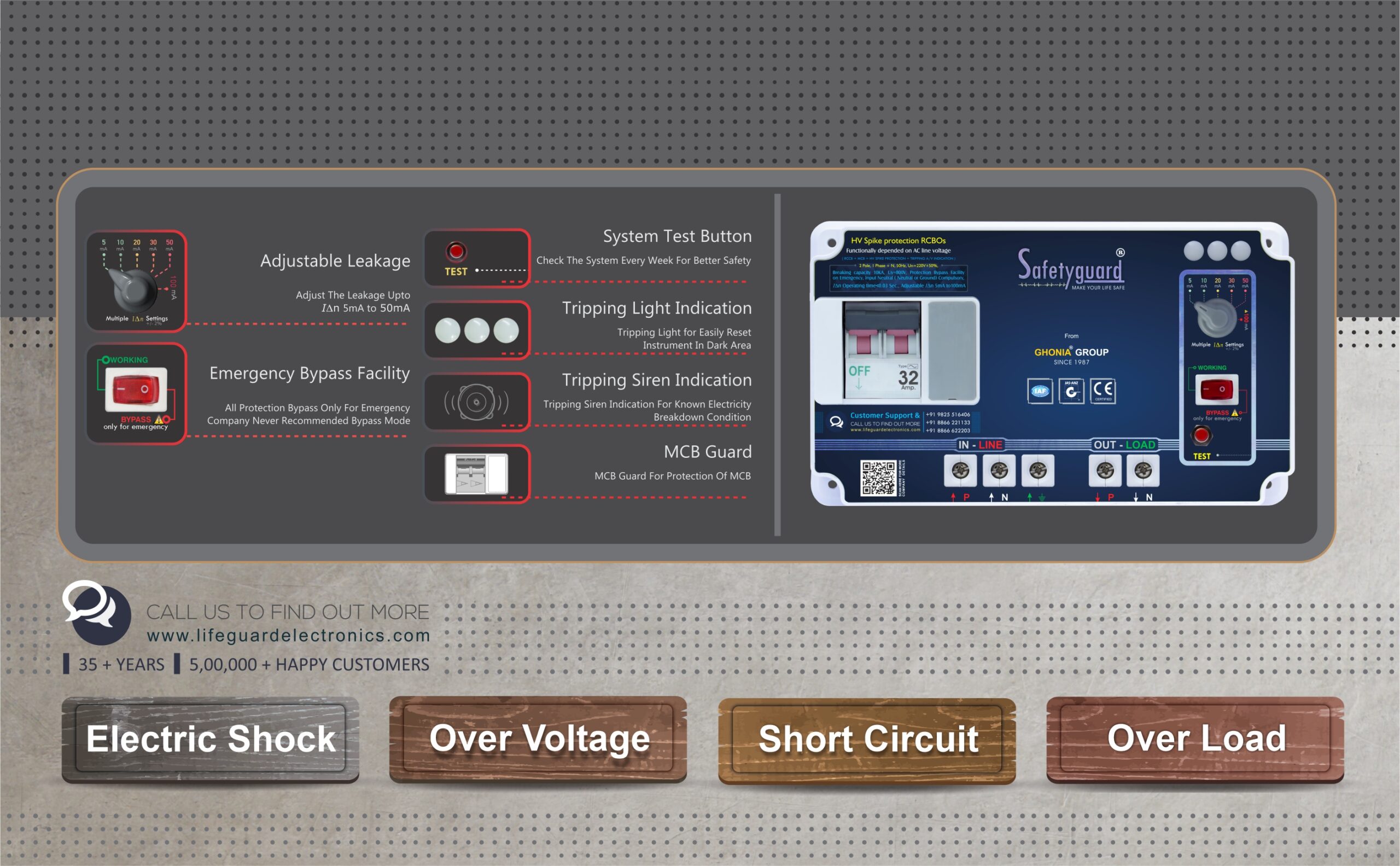
A residual current device (RCD), or residual current circuit breaker (RCCB), is an electrical wiring device that disconnects a circuit whenever it detects that the electric current is not balanced between the phase(“hot”) conductor and the neutral conductor. Such an imbalance is sometimes caused by current leakage through the body of a person who is grounded and accidentally touching the energized part of the circuit. A lethal shock can result from these conditions, RCDs are designed to disconnect quickly enough to mitigate the harm caused by such shocks.